
Are these 3 top predictions going to work in 2016?

The article below shows 3 top picks for Facebook Video Ad formats. The informational format with images and text captions are quick,30 seconds or less, resembling TV Ads. This shows how the fusion between media is still continuing.
Are these the best campaigns? Can you make money from them?

The article below shows some ways you use to add to your campaigns.
As it says online video accounts for 50% of mobile traffic.
In a recent Facebook campaign I ran I was expecting the target audience to come from PCs due to the age group. To my surprise , it was 67% mobile and an older demographic (women aged 45 and over). So video and mobile are taking over whatever the target and product.

Source: Top 5 Video Marketing Campaigns
How can you make something that can go viral?

The article below shows some ideas on how this can be done.
Maybe some can be right.

The Power Of Video, even with Tatoos
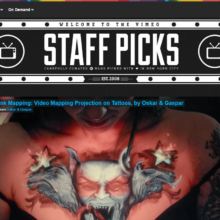
The staff pick from Vimeo shows what you can do with video techniques. Who needs CG.
Source: Ink Mapping: Video Mapping Projection on Tattoos, by Oskar & Gaspar in Vimeo Staff Picks on Vimeo
Maybe localized ads will use this more.
Apollo Missions: Amazing Photo Sequence

Just saw this and it is amazing to think that these pictures and film are over 45 years old. It is nice to look at the clarity and the style . Maybe I will try to copy this one day for a Video marketing sequence.
Drones have Positive Uses as Well!

This may not be video marketing or business consulting but it highlights how a chance video or picture can capture the attention.
Why rehearsing is important in video product creation

English: A view of the Rome Campus theater from the audience looking onto the stage, with student actors rehearsing, Spring 2002 (Photo credit: Wikipedia)
This article shows what is important when you are setting up even the samllest of videos and presentations. Without rehearing properly the results will seem vague and unprofessional.
Even if you’re only planning to create a 30-second video clip to post on YouTube, never underestimate the power of rehearsal. Rehearsing gets the actors relaxed enough to be themselves, or to take on the specific personalities called for in the script. If you plan to be the host or demonstrator of your own motivational or do-it-yourself video, rehearsing will let you become comfortable in front of the camera. If you have decided to create a how-to video, the hardest task is learning how to be yourself in front of a camera. Rehearsing is the best way to get over your nervousness and connect to your audience effectively.
Rehearse in different ways to find out which style of delivery works best for your project. Talk as you move and stand on the set, sit and talk, talk as you show how to do something, and talk in a voice over as your actors demonstrate how something is done. And remember: Whatever type of video product you decide to create, it’s important to make sure you have good lighting and plenty of space. Rehearse in different types of lighting to see what works best, and move around the set to make sure you have enough space.
When hosts stand or move on the set as they talk to an audience, they can transmit great energy and power to viewers. A host will sit and talk to create a laid-back atmosphere that encourages the audience to relax and feel at home. Just think about the most popular programs on television. What is the difference between a great host and an average host?
All great hosts stand as they deliver an opening monologue to an audience. They know how to use their hands, and they know how to keep their bodies poised to communicate exactly what they want their audience to remember. The best way to create great-selling video products is to study popular hosts and powerful speakers. Learn from them, imitate their techniques, and practice in front of a camera.
Ask your friends to give you their honest feedback. Were you convincing in the video? Did you connect to your audience? Did they stay focused on what you were saying? The most important question to ask your “focus group” of friends and family members is: What message did they get from your video? What do they think you’re trying to say? What are viewers motivated to do after seeing your video? Answers to these questions are the best measure of the effectiveness of your video product.
Most of us are in for a shock the first time we carry out this experiment. We think we have covered a topic completely, only to find that our audience cannot say with certainty what that topic is. Leave your pride out of it and you’ll be on your way to learning how to create great video products. Listen to your customers and potential customers. Listen to their feedback. Ask for suggestions about how to be a more effective host or speaker. Practice, practice, and keep on practicing.
Related articles and some alternative views


 The advice here is far from new and has beeen repeated many times. Nevertheless it is still evergreen and valid advice.
How to get started in the business of video product creation
How to get started in the business of video product creation
Television is moving online. In the last year Internet TV has grabbed the attention of the biggest media corporations in the world. Disney has entered into a partnership with Brightcove and the BBC has partnered with YouTube. And this is just the beginning-what you see today is the tip of an iceberg that will keep on growing for years to come.
Anyone can be famous, as the promo for Cisco’s “Human Network” campaign says. Anyone can be a producer today, and that’s only half of it-anyone can be a broadcaster of video content on the Worldwide Web. Video sharing sites like YouTube have created a sort of producing frenzy in the video world, and to be honest about it, there is an enormous amount of junk online. But don’t let that turn you against the medium. New technologies and new business models make it surprisingly easy for companies and individuals to market and deliver video products on the Internet today.
Even if you have experience with video product creation in traditional formats like video cassettes, CDs, and DVDs, you may not be fully aware of how new tools available on the Internet can take your business to the next level. Here are some tips on how to get started:
* Don’t quit your day job-you don’t have to in order to test products on a web site. Some of the fastest growing sites on the Internet today were launched by people who had full-time jobs. They entered the market gradually by testing sales of new products and services on the Internet. When they were convinced that a niche market was there to sustain them, they plunged into the Internet business full time. Your numbers will tell you when to quit your day job.
* One of the best ways to build a niche market is by selling video products on the Internet. Look at the types of videos that other people are selling. Which ones would you want to buy? Which ones add something of value to your life? Look around. When you find something you like, go ahead and buy it. If you have never purchased a video download on the Internet, you’ll be surprised by how easy it is. This is important preparation for you as a future marketer of online video products.
* The video you just purchased may be the best investment you ever make. Watch it from the point of view of a customer. Did you get your money’s worth? Would you buy another video product from the same site? If you aren’t completely satisfied, can you get a refund? Then watch the video from the point of view of a creator of video products. Why does this video work? How does it connect to my experience? And if the video falls flat on its face, why doesn’t it work? Why doesn’t it connect to me as a viewer?
As you provide answers to these questions, you will start to discover concepts that can be developed into your own video products for sale on the Internet. When you’re ready, all you need is a webcam, a computer, and a connection to the Internet.
Why you need to focus on video product creation
This is something I came across that explains the attitude you need to have when creating videos.

Image via Wikipedia
Why you need to focus on video product creation
It’s easier than ever to create a video product for sale on the Internet. All right, I know you can’t compete with the big media corporations if your dream is to produce the next Lord of the Rings Trilogy. (In that case, your goal should be to get a job at a production studio and work your way up.)
But creation and distribution of online video products has become so easy-and so economical-that anyone with an Internet connection can become a broadcaster of video content for the Worldwide Web. (The faster your server connection, the better-a broadband connection is ideal for uploading video content to the Internet.)
As an Internet marketer, you need to be aware of what you can achieve by creating video products for sale on the Internet:
* The sale of video products lets you launch an online business with a minimum cash investment.
* If a video product is unsuccessful, it’s easy to pull it off the market without running up losses-you don’t have to invest in inventory to launch an Internet video business.
Find a vision for your video product. The keys to creating a successful video product are the same as the keys to success in any business venture: establish priorities and stay focused on your goal. Your vision must be to create a video product that adds something of value to your customers’ lives. Inspirational videos and how-to videos accomplish this goal-one of these areas is a good place to start. Keep these simple tips in mind as you start to develop a video product for sale on the Internet:
Focus on your strengths. Find one thing that you do well and build your video around it. Don’t spend a lot of time trying to fix your weaknesses-we all have them. Successful people spend most of their time doing what they do best-they concentrate on their strengths.
Stay in touch with your customers. Businesses fail when they stop listening to what their customers are saying. Always approach your video business as a system that needs to be constantly improved to maintain your advantage over the competition. Stay focused on your customers. Concentrate on creating a video product that adds something of value to their lives.
Test the market. You don’t have to quit your day job to start creating video products to sell on the Internet. Most people think that great companies are established by entrepreneurs who risked everything to test a business idea. The truth is that many successful Internet entrepreneurs launch and test their business systems without quitting their jobs. You can create a video product without leaving your job, test the market on your web site or blog, and tweak the business system until the profits tell you when to plunge into the new business full time. Your chances of success can be greatly increased by making a gradual entry into an Internet video business.
Related articles
- Show and tell – the importance of video for your business (marketing.yell.com)
- 5 Places To Find Videos for your Business (i-netpreneur.com)

Four key elements in the creation of a great video product
![English: Camera operator, for TV] Français : C...](http://commons.wikipedia.org/wiki/File:Schonach_video.JPG "English: Camera operator, for TV] Français : C...")
Image via Wikipedia
Four key elements in the creation of a great video product
The type of video you decide to create will largely determine the other elements that you use. Keep these four key elements in mind during the planning and production of your video products:
* Target Audience: This is the most important decision you need to make. Who are you trying to reach? You have to think about demographics: age, socioeconomic level, gender, nationality, educational level. It’s no good to jump into the planning process with vague statements like, “I want to create a video product for sale on the Internet that will appeal to everybody, everywhere.” First define your niche market, narrow your target audience, and create your video with a specific type of person in mind. When you set out to create the kind of video product that one specific person will want to buy, you increase the likelihood that a lot of people will want to buy it. Always wrap your language in images that your target audience can relate to.
* Participants: If you decide to shoot a how-to video on an area in which you have expert knowledge, you are the natural choice as host. If you decide to create a do-it-yourself video in an area where you don’t have expert knowledge, you will need to take great care when choosing a host. Once you’ve decided on a subject and a host, you will need to work together on the script. And always remember that video is not just a format-it’s a language. Never say it if you can show it. The viewers will understand much better when they see it being done, so don’t just explain things while the camera focuses on you. The rule of thumb is: Whenever you can present a visual image of something, show it instead of talking about it. Instead of explaining how to do something as you talk into the camera, always show a demonstrator (whether it’s you or another person) carrying out the action as you describe what’s happening. You’ll quickly become an expert in the use of “voice overs”-speaking off camera as the audience sees action taking place. Do-it-yourself, educational, and promotional videos should be full of voice overs.
* Length: The type of video you decide to make will determine the best length. A great promotional video can be done in as little as 3 to 4 minutes, and should rarely be longer than 7 to 8 minutes. A do-it-yourself or educational video will be from 10 to 30 minutes.
* Props: If you’re doing a how-to video, the subject matter will determine what props you’re going to need. Even if you plan to be your own host or demonstrator, make a list of all the props you’ll need. Lay out the shoot before you do it and walk through it several times with your camera operator. This will keep the shoot from turning into chaos-even experienced studio professionals work with a prop list every time they shoot.
Related articles
- How to create an engaging video for online video marketing (marketing.yell.com)
- What is video production? (marketing.yell.com)
